A game system is the set of rules, inputs, feedback loops and incentives that turn a piece of software into something a player can act inside — and every decision you make about one, whether you're designing, competing in, or just trying to enjoy it, comes down to which of those layers you're actually changing. Most arguments about games that go nowhere are arguments about different layers: one person is talking about the control scheme, another about the reward schedule, a third about the competitive ruleset, and none of them are wrong. Sorting a game into its systems is the difference between a critique that lands and a preference that just sits there.
The core loop is the only part that has to work
If the moment-to-moment action isn't repeatable and legible, nothing built on top of it survives contact with a player. The core loop is the shortest complete cycle of player action, system response, and changed state: you aim, you shoot, you see the enemy drop and your ammo count fall. Everything else — progression, cosmetics, ranked ladders, seasonal content — is a layer on top, and layers on top of a broken loop just make the failure slower and more expensive to diagnose.
The reason this matters practically is that a loop is judged in seconds, not hours. A shooter that feels wrong at the trigger pull will not be rescued by a battle pass. A strategy game with an unreadable economy will not be rescued by a campaign. When a game is failing and the studio announces a progression overhaul, that's the tell: they're treating a loop problem as a retention problem, and the retention numbers will keep falling because the loop is what people were leaving. The reverse also holds — games with almost nothing on top of the loop can sustain enormous playtime if the loop itself has depth, which is why so many competitive titles ship with a single mode for years.
The cost of over-investing in the loop is scope. Tight loops take iteration time, and iteration is the most expensive thing a small team does. A designer who spends months tuning feel on a loop nobody asked to play has spent months on the wrong problem, and the honest trade-off is that you cannot evaluate a loop until it's playable, which means you can't schedule the work that makes it playable. Prototype in the ugliest possible form; the loop either reads or it doesn't, and it doesn't need art to tell you.
What goes wrong, and how you notice: playtesters describe the game in terms of its menus instead of its action. If someone's summary of a session is "I levelled up twice," the loop isn't carrying the experience. That's the signal to cut systems, not add them.
Inputs decide who can play, and how well
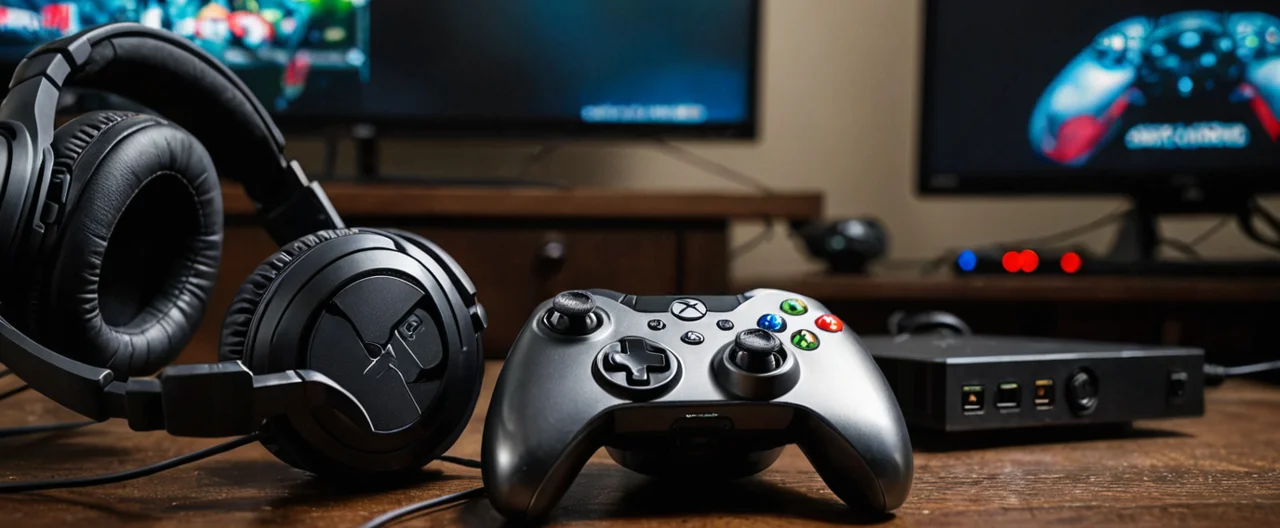
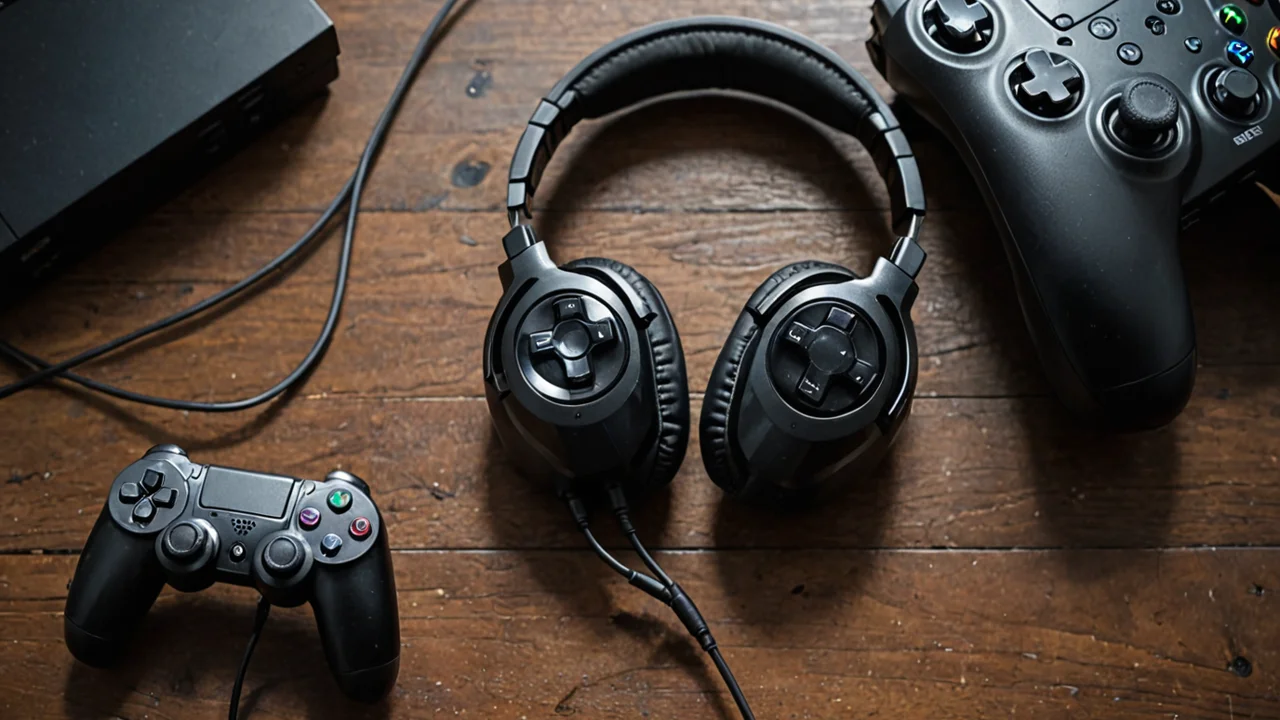
Control scheme is a system, not a preference, and it determines the ceiling of what a player can express. Mouse and keyboard give precision pointing and a wide range of simultaneous binds; a gamepad gives analogue movement and comfortable posture; a touchscreen gives portability and almost no tactile feedback. Every one of those choices changes what a game can ask of you, and a game designed around one input ported to another will feel either generous or hostile depending on which direction the port went.
This is where a lot of arguments about "skill" are really arguments about hardware. Aim assist on a controller is not a crutch; it's compensation for a device that cannot match a mouse for fine pointing, and studios tune it because crossplay between input types produces wildly unequal outcomes otherwise. If you play competitively, the input question is the first question, before loadouts or settings, because it caps what practice can achieve. The trade-off is straightforward: mouse and keyboard rewards precision and punishes you for a bad desk and chair setup; a controller rewards consistency and costs you ceiling in pointer-heavy games; touch rewards accessibility and costs you everything else.
The signs of a badly matched input scheme are easy to spot once you know to look. Menus that require a cursor on a console. Actions bound to combinations that only work on one device. A tutorial that teaches a control the player physically cannot perform. And latency, which is invisible until it isn't — the moment a player blames their deaths on input lag rather than their own decisions, they've stopped learning the game and started fighting the hardware.
Accessibility sits in the same layer, and treating it as a separate afterthought is a design error. Remappable everything, adjustable hold-versus-toggle behaviour, and generous timing windows cost a studio days and open the game to players who would otherwise bounce off in the first ten minutes. There's no sourced figure for how many players that is, but the direction is never in dispute, and the studios that ship it well do so in the control layer rather than in a menu bolted on at the end.
Feedback and readability: the systems players never notice until they fail
A game is unplayable the moment its feedback stops telling you the truth, and most of the craft in a good system is in signals the player never consciously reads. Hit confirmation, damage direction, cooldown state, resource levels, threat proximity — these are systems with rules as strict as any combat formula, and they fail silently. The player doesn't report "the audio cue for the reload was masked by the ambient mix." They report that the game feels unfair.
Readability has a hierarchy, and the order is roughly: can I tell what's happening, can I tell what's about to happen, can I tell what I did to cause it. Games that skip the third step produce players who are competent but never improve, because they can't attribute outcomes to their own decisions. That's the failure mode to watch for in your own play — if you can't say why you died, the information wasn't there, and no amount of practice fixes a missing signal.
The trade-off here is visual and audio clutter. More feedback means more noise, and a game that screams every state change becomes unreadable in exactly the moment it matters most, when six things happen at once. Good systems prioritise: the thing that will kill you gets the loudest channel, everything else gets a subtle one. That costs design time and it costs the player some information they'd have to dig for, and it's the right trade almost every time.
The historical version of this problem is charming. Tennis for Two, the 1958 electronic tennis game built by physicist William Higinbotham at Brookhaven National Laboratory, ran on an oscilloscope screen 5 inches in diameter — a display with essentially no room for anything but the ball, the net, and the court. Every readability decision in that game was forced by the hardware, and it's a useful reminder that constraints do most of the design work. Contemporary systems have the opposite problem: infinite display budget and no discipline imposed from outside, which is why so many modern interfaces are technically informative and practically unreadable.
Progression, economies and reward schedules: where retention is won and goodwill is lost
Progression systems exist to give a player a reason to return, and they work by converting time into visible change. That's it. The sophistication is in the pacing — how quickly the first reward arrives, how the curve flattens, and whether the thing you're grinding toward actually changes how you play or merely how you look. A cosmetic unlock and a new ability are both progression, but only one of them alters the loop, and studios that confuse the two end up with players who have everything and nothing to do.
The economy layer is where player trust is most easily broken. Currencies, conversion rates, time-gated rewards, and store pricing are all systems with maths behind them, and players reverse-engineer that maths faster than most studios expect. When the numbers feel designed to waste your time rather than reward it, the reaction isn't "I'll play more" — it's "I'll stop." The honest trade-off is that monetisation funds continued development, and a game with no revenue model stops receiving content. The line most players will accept is somewhere around paying for expression while earning capability; the line most players will not accept is paying for an advantage in a competitive mode, and crossing it tends to be irreversible in reputation terms even if the numbers recover.
Pacing failures announce themselves in specific ways. An early game that showers rewards and a mid game that dries up produces a sharp drop in engagement right at the point where the loop should be carrying the load. A progression tree where one branch is obviously stronger than the others produces a community consensus build within days, and then the choice is fictional. If you're evaluating a game as a player, ask whether your unlock decisions are actually decisions or just a queue — if there's a correct order and everyone knows it, the system isn't offering choice, it's offering homework.
Competitive systems: rulesets, matchmaking and the difference between a game and a sport
Organized competitive video gaming — leagues or tournaments with structured rules, teams or individual players, and often professional-level prizes and sponsorships — is a different system from the game it's built on, and conflating them is the most common mistake in the space. A game can be excellent and a terrible esport; a mediocre game can be a superb esport. What separates them is legibility to a spectator, stability of the ruleset, and whether the outcome is attributable to decisions rather than randomness.
Matchmaking is the system most players interact with daily and understand least. Its job is to produce close games, and every design choice in it trades accuracy against queue time. Tight matching means long waits and better games; loose matching means instant games and lopsided ones. Ranked resets, placement matches, and hidden ratings all sit in this layer, and when players complain that their rank "doesn't reflect their skill," they're usually complaining about a system optimising for speed rather than precision — legitimately, from their side, and legitimately from the studio's side too, because an empty queue is a dead game.
The ruleset layer is where competitive integrity lives. Map pools, character bans, patch cadence, and the timing of balance changes relative to major tournaments all determine whether a season is decided by skill or by whoever adapted fastest to a mid-season patch. The trade-off is real: frequent patches keep a game fresh for the ranked population and destabilise the professional scene; infrequent patches protect the competitive calendar and let a dominant strategy calcify. Neither is wrong, but a league that doesn't coordinate with the balance team is going to produce championship results nobody trusts.
For anyone considering the competitive path, the practical system to understand first is the ladder, not the game. How rating is calculated, when it resets, and what the queue population looks like at your level determine whether the time you put in converts into measurable progress. A game with a thin population at your rank will match you against people far above or below you, and no amount of practice fixes a ladder that can't find you opponents.
Distribution and community systems: where the game meets its players
How a game is delivered and watched is part of its system now, not a wrapper around it. Live streaming platforms — Twitch being the main one for game and esports content, where users broadcast gameplay, watch others, and participate in real-time chat and community features — have changed what a game needs to succeed, because a game that reads well to an audience gets free distribution and a game that doesn't gets none. That's a design pressure as concrete as any input scheme: spectator interfaces, replay tools, and readable team fights are now features, not bonuses.
There are rules attached. A Twitch account and streaming require a minimum age of 13 years, which means a large part of the competitive playerbase is watching and broadcasting long before they can sign a contract. Any parent or young player thinking about building an audience should treat that as the floor, not the plan — platform terms, school schedules, and the practical reality of moderating a chat are all systems with their own demands, and the ones who burn out are usually the ones who treated streaming as free rather than as work with a cost.
Community systems are the least glamorous and most decisive layer. Patch notes, developer communication, moderation, and the reporting pipeline determine whether a game's population stays healthy or curdles. A game with excellent moderation retains new players who would otherwise leave after one bad session; a game without it loses them permanently and never learns why. The cost is continuous — moderation doesn't scale cheaply, and the community's expectations rise with the game's size — and the failure is visible in the aggregate long before it's visible in any single match.
For a player, the practical read on this layer is simple: does the game tell you what changed and why? Studios that ship patch notes with reasoning are telling you they intend to keep the system legible, and that's a better long-term bet than any single balance decision. Studios that ship silent changes are telling you something too.
Put together, these layers explain why "is this game good" is a question with no single answer. The loop, the inputs, the feedback, the progression, the competitive ruleset, and the community wrapper are six separate systems that can each be strong or weak independently, and a player's experience is the product of all six. When something feels wrong, the work is identifying which layer — and then deciding whether the fix is yours to make. Sometimes it's a settings change, sometimes it's a different game, and sometimes it's accepting that the system was never built for the way you want to play.